BALANCE BALL TRAINING ON HALF BALLS WITH BUMPS
- For the dog's balance ball training
- Four pieces in a package
- Strengthens both toes and wrists
Training the dog on a balance ball is not just for active competition dogs or for rehab training. This is a form of training that actually fits almost all dogs, regardless of size and age.
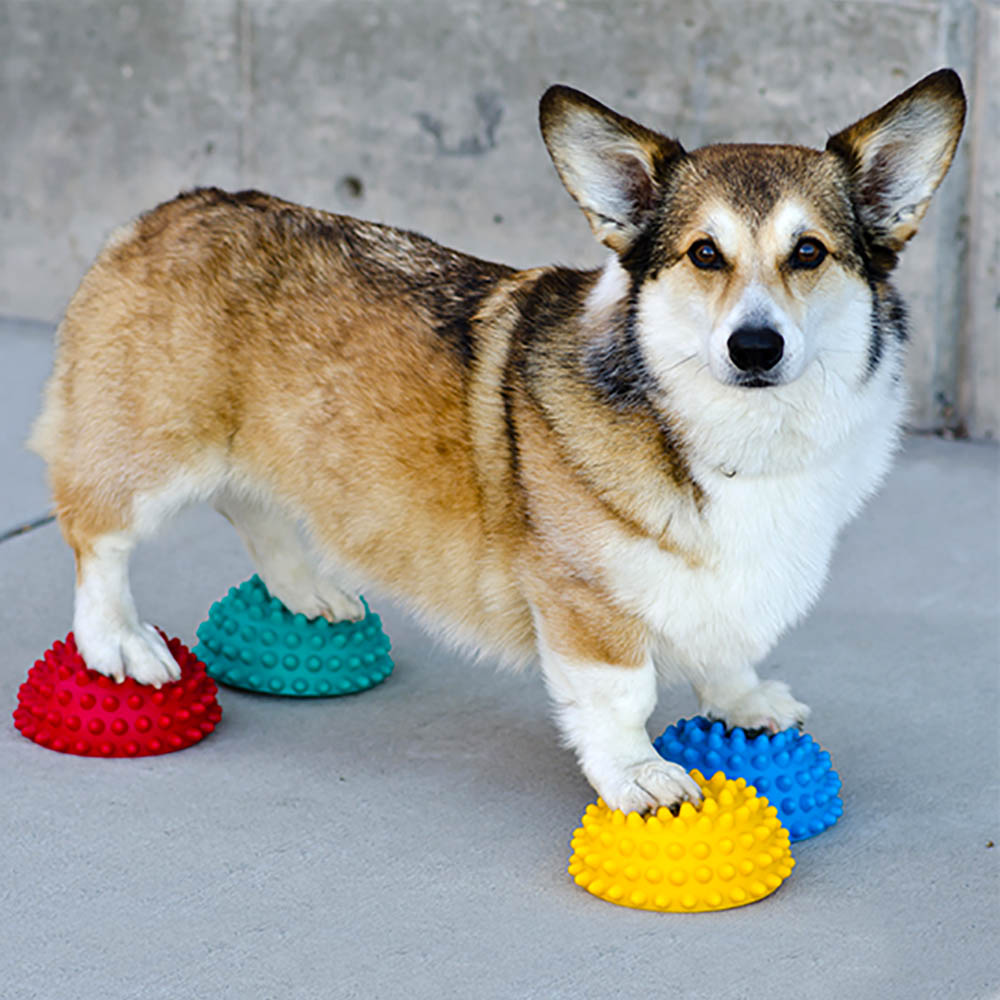
From American FitPAWS comes the half balls which are great for training the doggy's coordination, balance and body control and of course strength. The halfballs are just as it sounds, a half ball. The ball has a flat anti skid bottom, which makes it easier for the balance ball to remain in place.
At the top there are many small spikes, and it is precisely those spikes that give the balls an advantage. They act as acupressure and stimulate the nerves in the dog's toes and provide increased circulation.
The balls are also good at strengthening the dog's toes and tendons, which is something that many doggies may need. Through small and simple exercises, the balance balls can train the dog's wrists as well as train grips.
Like all other dog balance balls, there are almost endless exercises that the dog can do on the half balls. On the one hand, you can use one or two balls and only train the front or hind legs. Or you use all four balls and get a paw on each ball. Or why not combine pawpods with some other kind of balance ball?
Regardless of whether your dog is a companion dog or a competition dog, balance ball training can be both a fun and useful form of training. Not only muscle and body control are built here, but also self-confidence and communication.
The FitPAWS Paw pads are sold in 4-packs and come in mixed colors. A small practical mesh storage bag is included. Pump included.
SIZE
Size: 14 cm in diameter and about 7 cm high.
HANSESGÅRDEN TIPS
Balance ball training is much harder than it looks. So even if the exercise looks simple, it is tough for the doggy. Short training sessions are therefore recommended.
If you are rehabing an injured dog, we recommend that the doggie be trained in consultation with a dog physiotherapist or other medically knowledgeable staff.