Delivery: ✖️ Out of stock. We are working to get the item back in stock.
Carefully selected – trusted by dog lovers in Sweden
Fast delivery with UPS – track your parcel all the way
Handpicked selection – only products we trust and use ourselves
BrandFitPAWS
Country of originTaiwan
Description
Article no.: fitpaws_balancepad
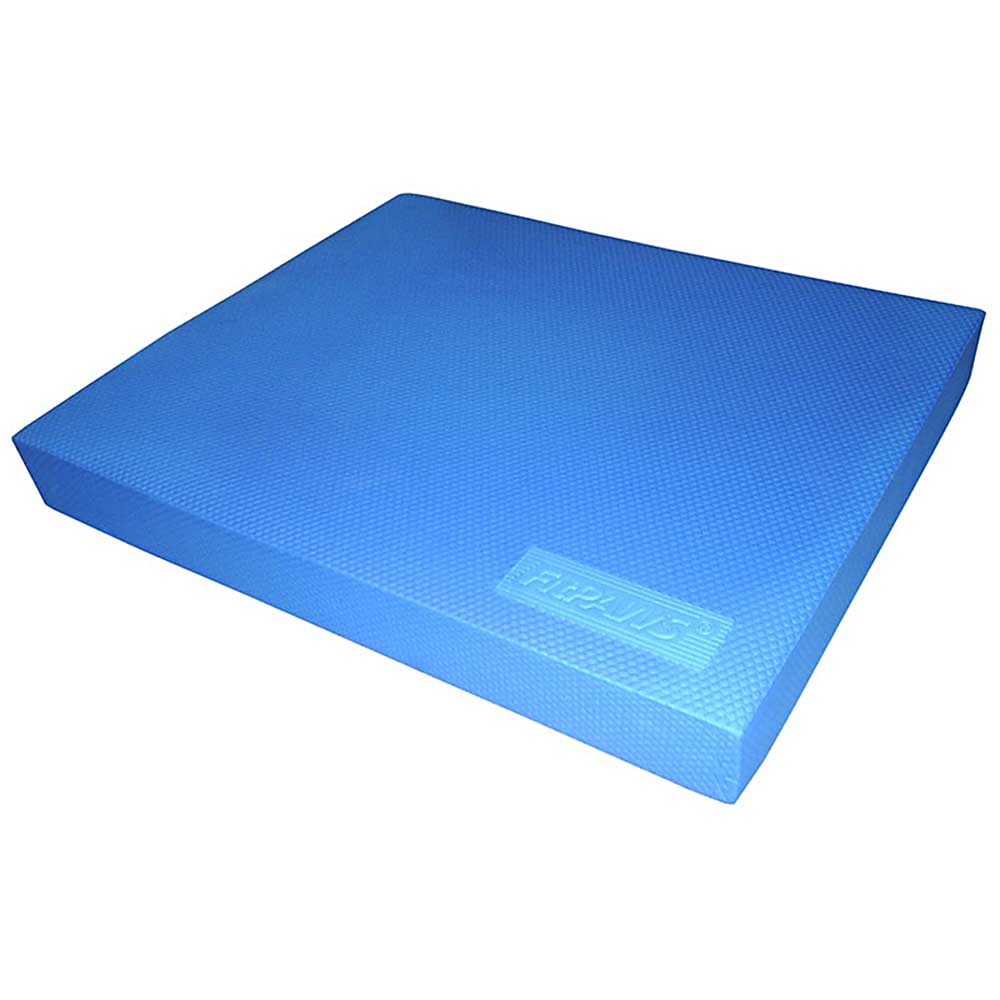
BALANCE PLATE FOR DOG TRAINING
Soft plate for dog training
For the dog's physical training
Works also as a target
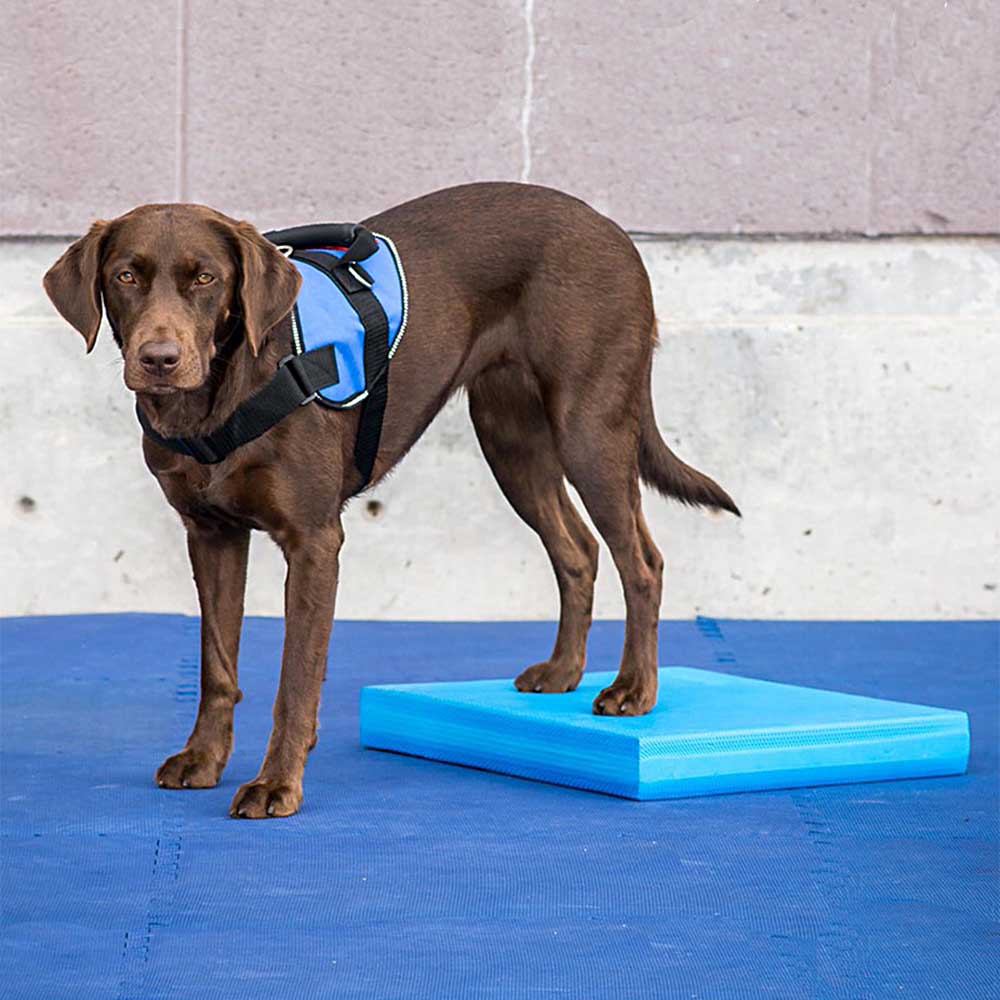
From American FitPAWS comes the balance pad, the square plate is suitable for beginners, but is equally useful for more experienced dogs.
The balance device is also suitable for senior dogs and puppies, and it can also be a good way to start rehab training an injured dog.
The FitPAWS balance pad is more stable than a classic balance ball, but at the same time provides more of a challenge than standing on the floor. This thick mat can be a good start to more advanced balance ball training.
A tip is to combine the balance plate with other types of balance balls or use together with cavaletti obstacles. You can also use two plates to use both front and back legs. To increase the degree of difficulty, you can put two pads on top of each other, this gives a higher height and at the same time softer to stand on.
The balance mat can also be used for obedience training when you want to practice positions. There it becomes a target that clarifies for the dog where it should put its paws.
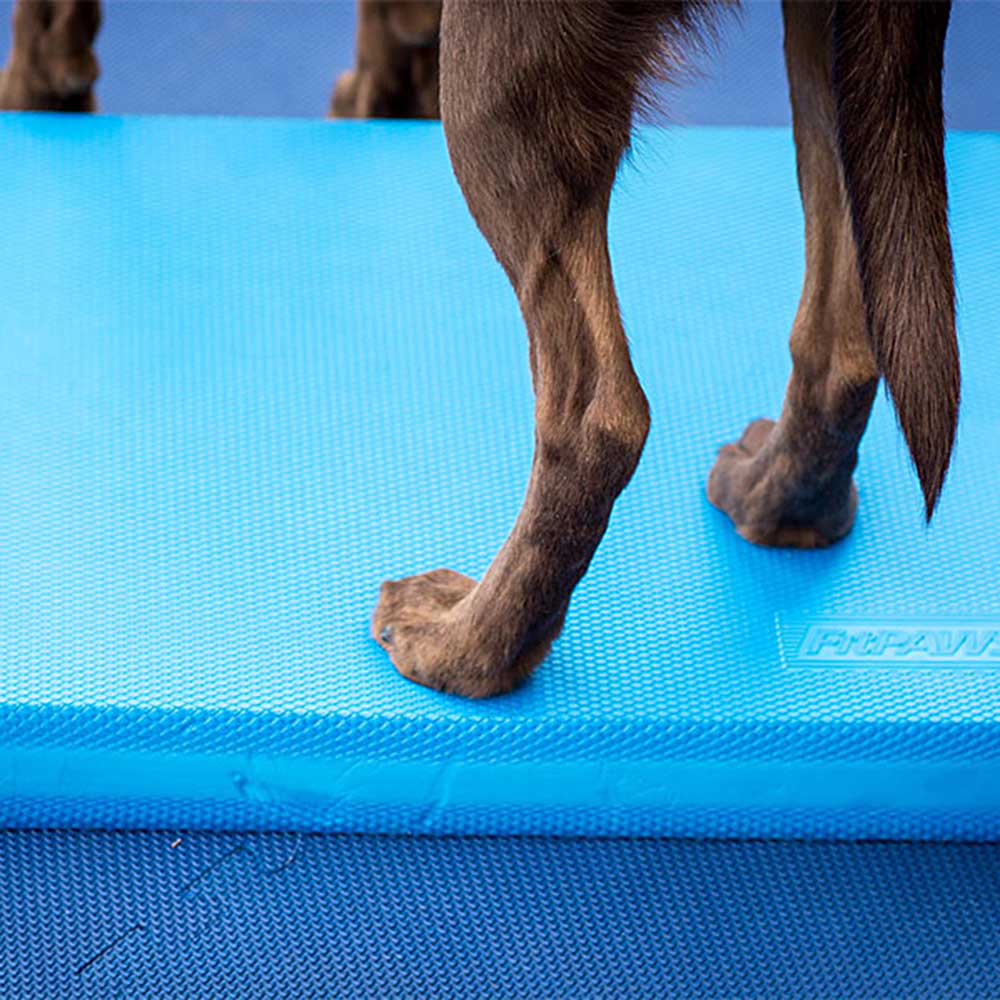
The FitPAWS balance plate is made of cellular foam. This makes the mat both soft and at the same time easy to clean. It also means that the dog's claws can leave traces in the carpet, but this does not affect the function of the balance plate.
SIZE AND COLOR
Length approx. 46 cm long, width approx. 38 cm. Height approx. 5 cm.
Color: blue.
HANSESGÅRDEN RECOMMENDS
Standing still is harder than it looks. So even if the dog "only" balances on a balance pad, it requires quite a lot from the doggy. So remember to train briefly and take breaks. If your dog has been injured, we recommend that you train the doggy in consultation with a dog physiotherapist or other medically knowledgeable staff.