BALANCE BALL TRAINING WITH DOG
- Smooth paw pod
- Sold individually
- Unsorted colors
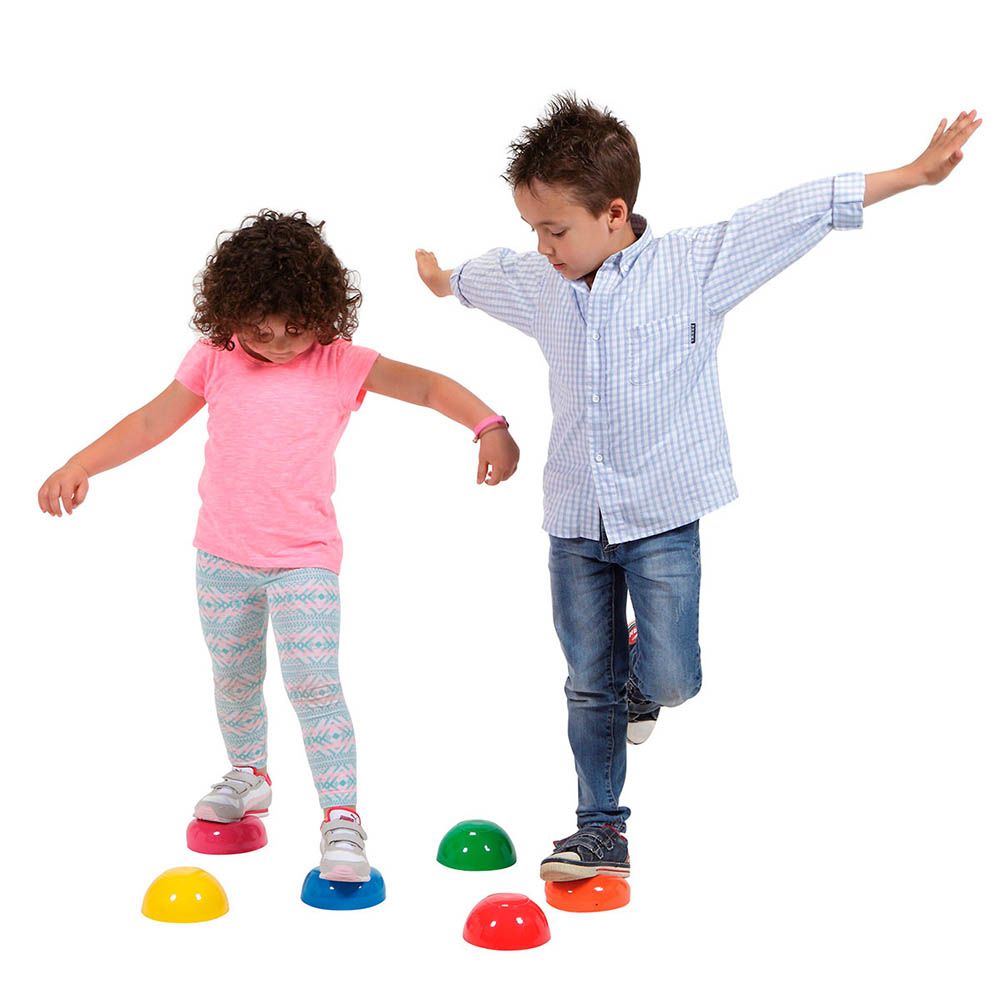
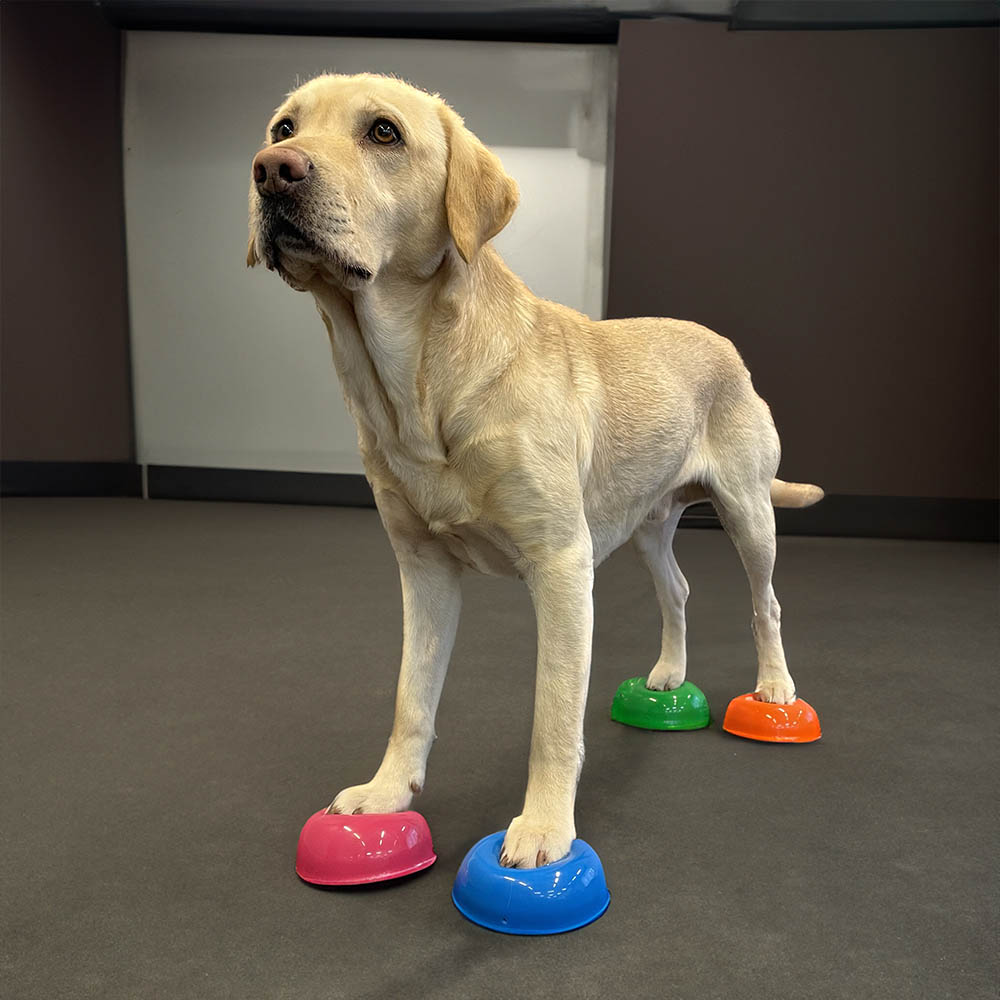
Activation stone or half ball, there are several names for this soft block that is good for weight training. Because by standing on the half ball, the dog gets to exercise its toes and toe joints. But it is also a useful form of exercise for wrists and the dog's core.
By training with balance balls, the doggy gets to work on his balance, body control and coordination. Here you build the dog's confidence at the same time as the doggy and you deepen your connection.
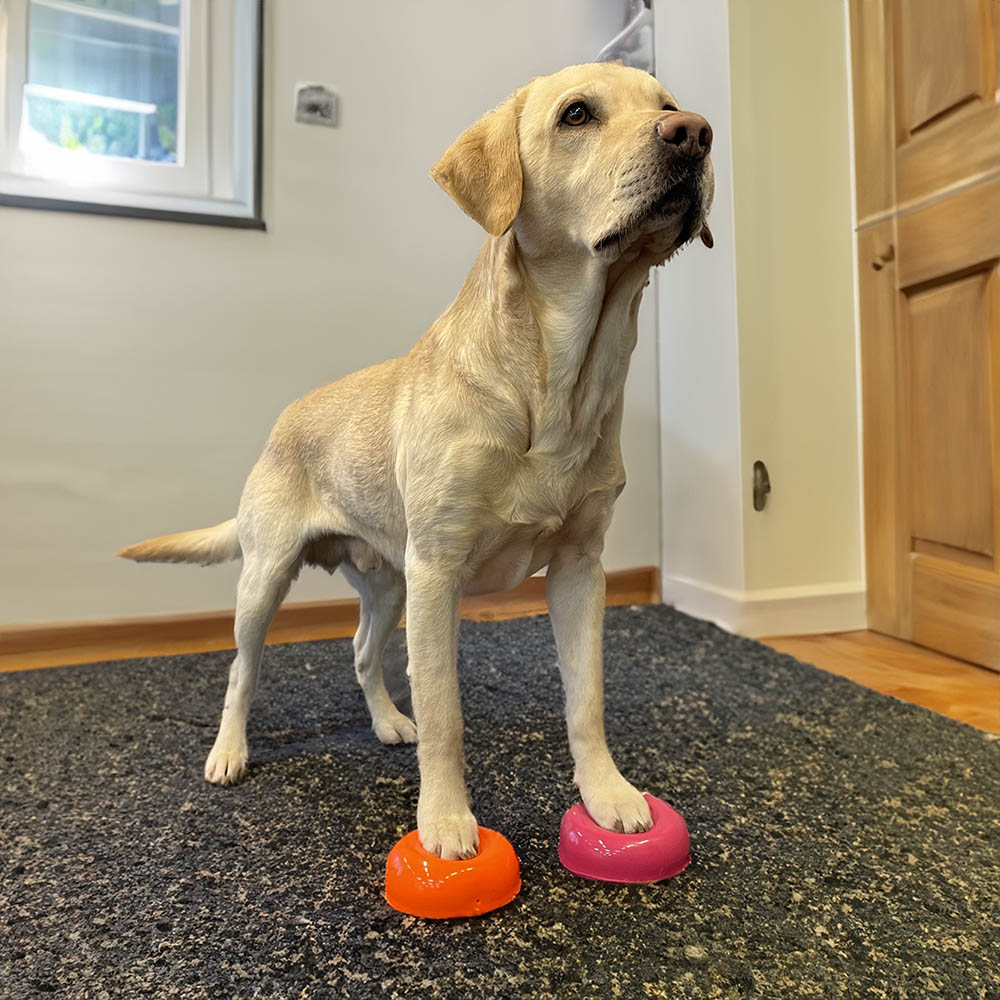
There are almost any number of different exercises. Have two paws on half balls and two paws on the ground, or on another kind of balance ball. Or take all four paws on half balls. If you have a small dog, it may be able to stand with two legs on the same hemisphere. Only by varying the reward position can the dog train.
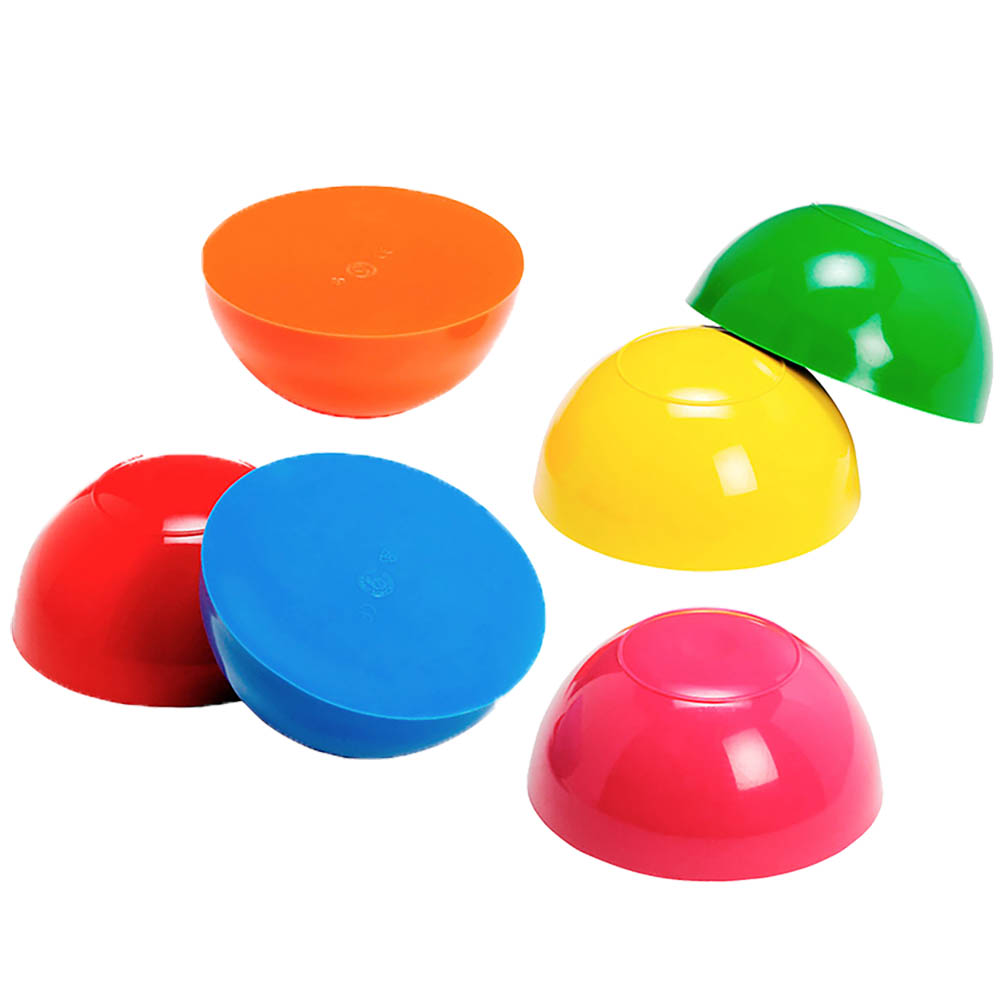
These activation stones are quite smooth on top, but thanks to their surface the dog gets a good grip. If you want to make the exercise even more difficult, you can always try to wait for the half ball and let the doggy stand on the flat side.
Strength training on a balance ball is a form of training that is suitable for all types of dogs. Both for the companion dog who wants some fun activation and for the more physically active dog who wants to become stronger and more aware of his body. So regardless of whether it's about wellness or rehab training, half balls can be just the thing for you and your dog.
The half-ball is delivered inflated and ready for immediate use. If you want, you can top up with more air, then use a pump with a needle valve. Pump sold separately
here.
SIZE AND COLOR
Size: 14 cm in diameter and approx. 6 cm high.
The ball is available in six different colors: yellow, red, pink, orange, green and blue. Comes in unsorted colors, so it will be an exciting surprise to see which color you get in your order.
Maximum weight: 90 kg.
HANSESGÅRDEN TIPS
Standing on a balance ball may look easy. But keep in mind that balancing is much more difficult than it looks. Our tip is therefore to keep the training sessions short.
When rehabilitating an injured dog, we recommend that the dog be trained in consultation with a dog physiotherapist or other medically knowledgeable staff.