CLIMATE-SMART REWARD CANDY THAT TASTES GOOD
- Contains insect protein
- Often works well for dogs with sensitive stomachs
- Good for the environment
Your dog almost always deserves a little treat. Like when it does something good. Or when it's cute or when you want to reward your dog for training. So why not take the opportunity to give something that the planet also thinks is good?
From England comes Yora Rewards, the climate-smart dog treat that therefore tastes a little extra good. By being based on insect larvae instead of traditional meat, it produces less carbon dioxide emissions. And to be extra good for the doggy, Rewards does not contain any added sugar.
The eco-friendly dog treat contains insects, a fly larva. The insect larvae are also packed with healthy protein, minerals, fat and immune-boosting antioxidants.
In addition to the larvae, there are also oats, potatoes, prebiotics and blueberries, which make the treat even tastier. In addition, Rewards is flavored with both peanut butter and banana, which makes it taste really good.
The dog treat, which is natural and environmentally friendly, also works well for allergic dogs and doggies with sensitive stomachs. A really good reward treat, in other words.
WHAT ARE THE INSECTS IN YORA?
The larva in Yora is a black soldier fly called Hermetia illucens. The insect larva lives on fruit and vegetable waste from the food industry, which helps reduce waste. Since the larvae grow quickly and do not create any harmful waste, its environmental impact is very small.
Yora does not contain growth hormones or antibiotics.
SIZE
The bag holds 100 grams.
One piece is approximately 2 x 2 cm.
YORA REWARD TABLE OF CONTENTS
Hermetia illucens larvae (insect meal 25%), oats, chickpea flour, peanut butter (12%), vegetable glycerin, insect oil (Hermetia illucens), dried fruit (2%; banana), lignocellulose, minerals.
Analytical constituents
Crude protein 21%, crude fat 15%, crude ash 4.7%, crude fiber 3.8%, moisture 18%.
Store in a cool, dry place.
THUS WE CALL IT CLIMATE SMART
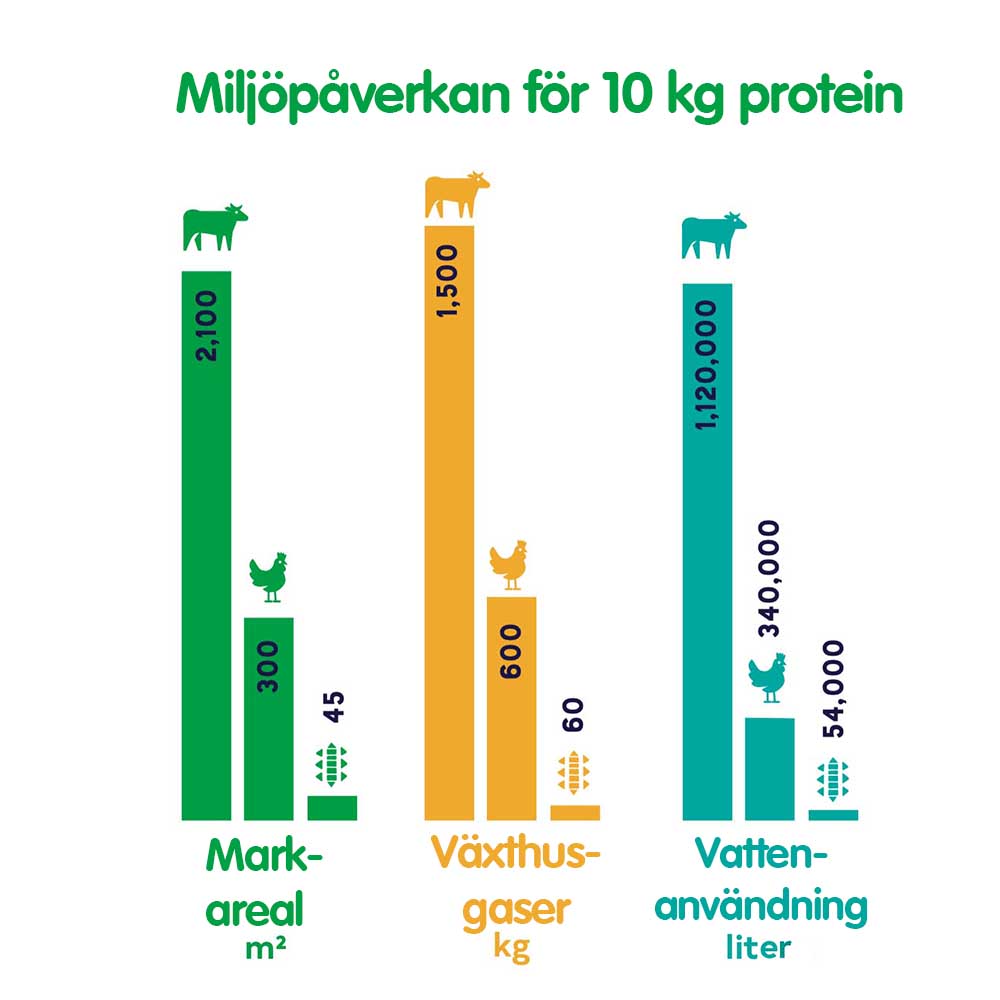
The larvae found in Yora are fast-growing and require relatively little land and small amounts of fertilizer and water. Compared to, for example, cattle or chicken, the larvae therefore have a lower climate impact. Then add that the larvae produce almost no greenhouse gases and that they cause no pollution or deforestation, and you understand that this is better for the planet.